Railroad Outside Counsel Services

Two decades of defending carriers, in the courtroom and out of it.

This is the work I've done longest and know best. I try these cases in Indiana, and I consult on them wherever they're pending.

The docket

What comes across my desk.

FELA

Employee injury claims

Cumulative trauma and single-incident claims, from the initial injury report and the on-property investigation through trial.

That includes Locomotive Inspection Act and Safety Appliance Act claims, where a violation takes the employee's own negligence out of the damages and the defense has to be built on causation and on the injury itself.

Crossings

Grade crossing and trespasser claims

Sight distance, warning device performance, track speed, horn compliance, and what the event recorder and forward-facing video actually show. These turn on the physical record far more than on the pleadings.

Federal preemption can take the warning-device claim out of the case before a jury ever hears it. I won summary judgment on exactly that ground, and the Indiana Court of Appeals affirmed it in a published opinion.

FRSA

Whistleblower suits

Retaliation claims brought under the Federal Rail Safety Act, from the OSHA investigation through the hearing or the district court case that follows it.

Catastrophic

Serious injury and wrongful death

A death or a catastrophic injury on the property produces a claim that both sides will work up with specialists. The medical, vocational and life-care proof has to be assembled early, before the other side's version of it sets.

Spoliation

Spoliation and preservation disputes

I defend railroads in spoliation disputes involving locomotive event recorders, inward and forward-facing video systems, and preservation after serious incidents.

Response

Incident response and evidence preservation

On scene as soon as possible after an incident. Recorder downloads, crew interviews, site and sight-line documentation, and getting the preservation posture right before anyone argues about it.

Employment

The employment side of an injury claim

Discipline, fitness for duty, and return-to-work all sit next to the injury file and are frequently the reason it exists. They also produce a personnel record that plaintiff's counsel will eventually ask for in its entirety, which is worth knowing before it's written rather than after.

The record

Nine FELA juries. Seven defense verdicts.

7 of 9

FELA jury trials I tried to verdict that ended in a defense verdict.

6 of 9

Were end-of-line claims, in which the plaintiff claimed never to be able to work again.

2

Defense verdicts in admitted liability FELA cases.

One of the seven was affirmed on appeal. In another, the railroad recovered its costs from the plaintiff. Short of trial, I've won summary judgment for railroads in state and federal court, on preemption at a grade crossing and on notice under the FELA, and defeated an employee's attempt to enjoin a disciplinary hearing under the Railway Labor Act.

The first days

Most of these cases are decided by evidence with a short shelf life.

Much of the key evidence is gone within days or weeks unless someone preserves it.

Recorder and video

Event recorder data and forward-facing video move on their own duty cycle. Pulling and preserving them is a first-day call, not a later one.

Crew accounts

Interviews taken while the sequence is still fresh, and taken correctly, hold up. Recollection reconstructed two years later doesn't.

The site itself

Sight lines change with the season. Vegetation, sun angle, and approach photography are worth documenting in the first days, not the following spring.

Preservation posture

Getting the hold in place and documented is what keeps a spoliation argument from becoming the other side’s best exhibit.

Outside Indiana

Consulting on cases in other states.

Carriers bring me in on cases I'll never appear in. What has to be preserved and how, which experts will survive a cross-examination, and whether the defense being assembled is the one the facts will actually support. Sometimes that's a single telephone call about a scene. Sometimes it's a standing role working with in-house legal and the claims department.

When the case is filed in Indiana and your regular trial counsel isn't admitted here, that's a different arrangement, and it has its own page.

Either way, the work runs under your outside counsel guidelines: your budgets, your reporting schedule, and your e-billing system.

In the industry

A short list.

I'm a member of the National Association of Railroad Trial Counsel, the Defense Trial Counsel of Indiana, and Railroads of Indiana, and I serve as Parliamentarian of the League of Railway Women. I've spoken at national railroad industry conferences, including the Annual Railroad Liability Conference.

Only a handful of lawyers in Indiana are actually experienced in defending railroads. FELA isn't ordinary negligence, a rail yard isn't an ordinary workplace, and the only way to learn either is to spend years trying these cases.
Speaking

At the Railroad Liability Conference.

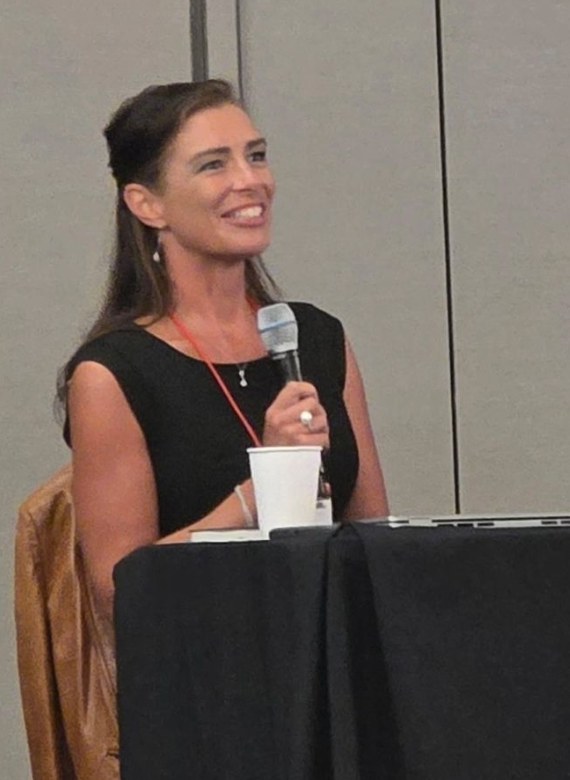
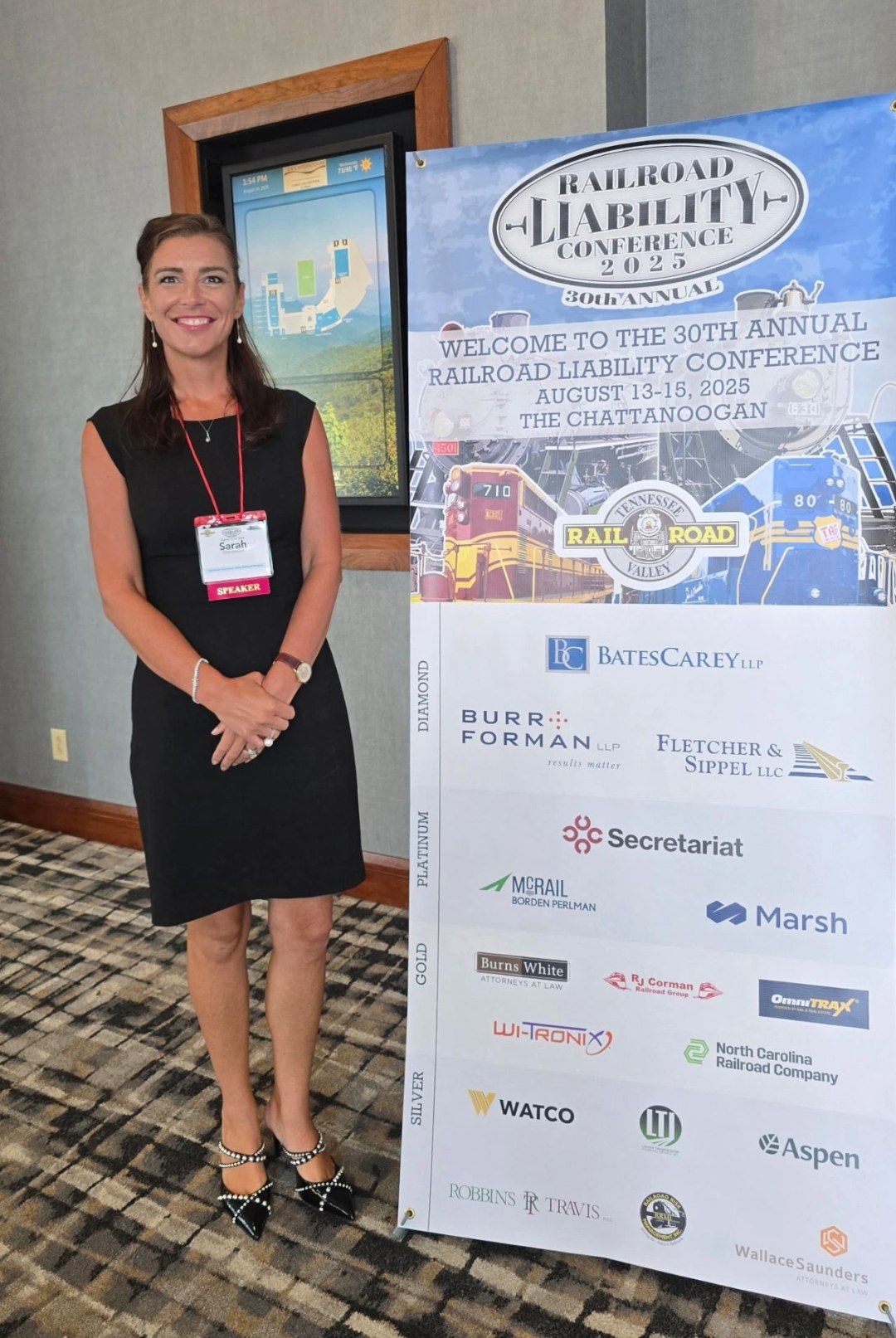
The Railroad Liability Conference is an annual gathering of the claims professionals, in-house lawyers, and outside counsel who handle railroad claims. In 2025, its thirtieth year, I spoke there on surveilling social media.

Sarah N. Dimmich speaking on a panel at the 2025 Railroad Liability Conference
On the panel, Surveilling Social Media
Sarah N. Dimmich beside the banner for the 30th Annual Railroad Liability Conference, Chattanooga, August 2025
The Chattanoogan, August 2025